
Woodstock, GA · Serving North Metro Atlanta
Dustless Planetary Sanding in North Metro Atlanta
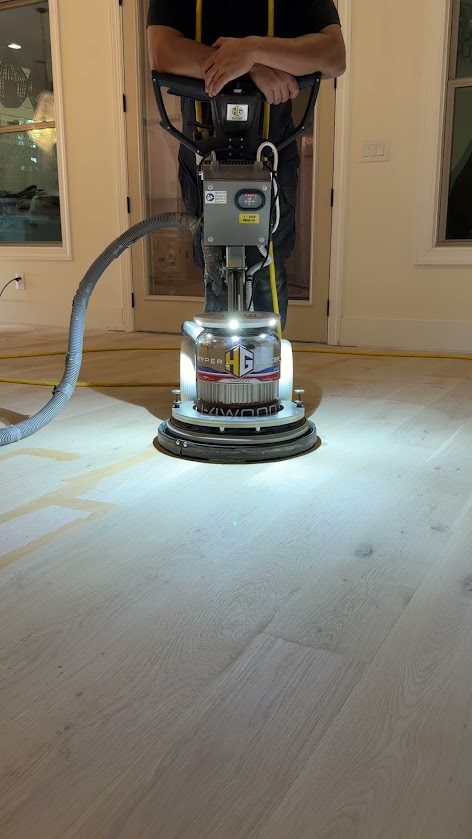
A 4 HP Hyper Grinder HG multi-disc planetary sander flattens floors instead of digging into them, blends the edges into the field, and pulls the dust into a vacuum instead of your house.
- 10,000 jobs completed in Georgia
- 25 Years of Experience
- Insured & Family Owned
What a Planetary Sander Is, and How It's Different From a Drum Sander
Our planetary sander is a Hyper Grinder HG by I-4WOOD — a 4 HP, 1-230V multi-disc machine that connects straight to a dust extractor and carries its own LED ring light around the sanding head. Instead of one big drum spinning against the floor, it drives several smaller discs across the surface at once, each cutting in a different direction.
That's the core difference from the drum sanders most crews still run. A drum cuts hard in a single direction along the grain — it's powerful, but unforgiving. Dwell a beat too long in one spot and you get drum stop marks, chatter, or waves that telegraph straight through the stain and finish. Drum systems also need a separate edger to work the perimeter of the room, and edgers leave their own swirl pattern where they meet the field — a ring you can often see once the finish goes down.
Because a planetary head cuts in multiple directions at once, and the same head does both the field and the edges, it flattens the surface instead of digging into it and blends the perimeter into the rest of the floor instead of leaving a visible seam. The sanding stage decides how flat and how even a floor looks for as long as you own it — the finish just sits on top of whatever the sanding left behind.
Drum + Edger vs. Planetary: Side-by-Side
| Drum + Edger | Planetary (Hyper Grinder HG) | |
|---|---|---|
| Flatness | Cuts hard in one direction; dwelling too long can leave stop marks, chatter, or waves | Counter-rotating discs cut in multiple directions at once, flattening the field instead of digging into it |
| Edge blending | A separate edger works the perimeter and can leave a visible ring where it meets the field | One head works the field and the edges, blending the perimeter into the rest of the floor |
| Dust | Varies with the machine and vacuum setup in use | Integrated dust extraction pulls the vast majority of dust into the vacuum right at the disc — virtually dustless, never claimed as 100% |
| Risk on thin wear layers | An aggressive one-direction cut leaves less margin for error on engineered floors with a thin wear layer | A more even, multi-direction cut leaves more margin before you hit the plywood core |
| Finish appearance | Waves, stop marks, or a visible edger ring can telegraph through stain and finish | A flatter, more even surface reflects light evenly once the finish goes down |

Where It Makes the Biggest Difference
Every job benefits from a flatter sand. These are the situations where a planetary head earns its keep.
Wide Plank Floors
Wide boards move more with humidity and show unevenness more easily under raking light. A flatter sand shows less waviness once the finish is on.
Engineered Floors With a Thin Wear Layer
There's less real wood above the plywood core to work with. A more even, multi-direction cut leaves more margin than an aggressive one-direction pass.
Exotic Species
Dense, hard exotics can be less forgiving of an uneven cut. Multiple discs handle that density evenly across the whole field.
Floors Someone Else Already Sanded Badly
If a previous refinish left dips, waves, or drum stop marks, a planetary head is built to flatten that back out instead of following the existing damage.
Occupied Homes
Integrated dust extraction and a cleaner job site every day matter most when you're living in the house during the work, not moving out for it.
What "Virtually Dustless" Actually Means
The Hyper Grinder HG connects straight to a dust extractor, pulling dust into the vacuum right at the disc as it cuts instead of letting it go airborne and settle across the house. That's the honest mechanism behind dustless sanding — it's extraction happening while the machine runs, not a claim about the finished job.
We won't tell you it's 100% dust-free, because no sanding method is — anyone who promises that isn't being straight with you. What "virtually dustless" means in practice is a lot less dust in the air and on your surfaces than older equipment without integrated extraction, and a lot less cleanup once the crew packs up for the day. It's the difference between a job you can realistically live through and one that shuts down the rest of the house.
A Closer Look at the Equipment
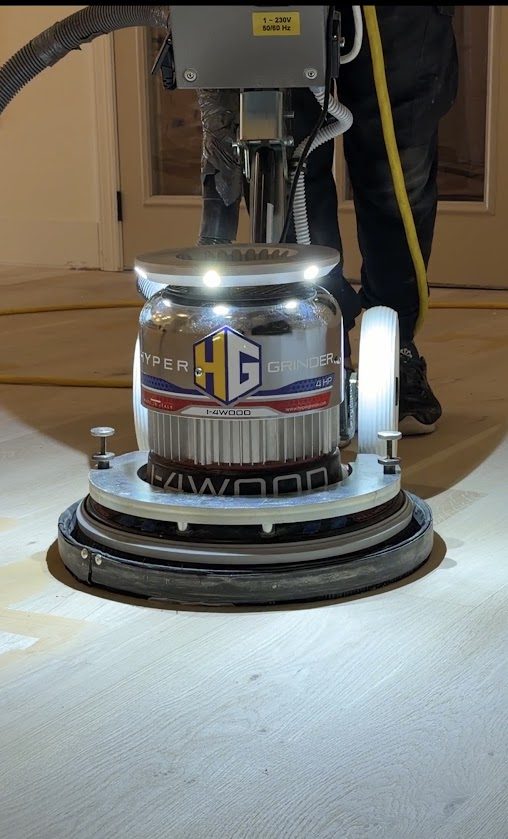
The Machines We Run
The equipment on your job
Bought, not rented
We bought the machines that make the difference instead of renting whatever the supply house had left that morning.
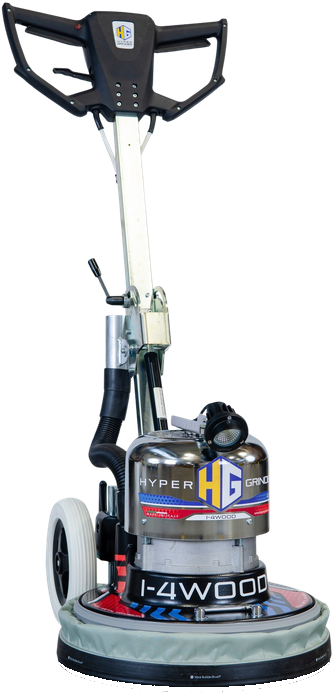
Hypergrinder I-4 Wood planetary sander
A planetary sander rather than a drum machine. It cuts flat, which is what keeps chatter marks and dished-out edges off your floor and lets the finish lay down even from wall to wall.
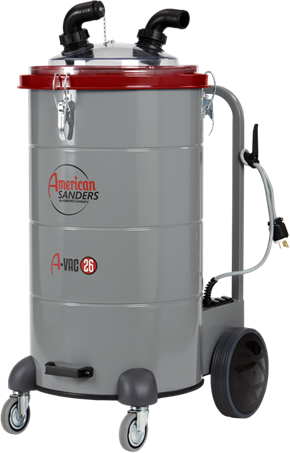
Sealed dust containment
The sanders run into a sealed containment vacuum, so the dust ends up in the drum instead of on your cabinets, your trim and everything you own. You will still want to cover a few things. You will not be cleaning grit out of the house for a month.
We also take longer on a floor than a production crew does. That time goes into the prep, the cut and the coats — and it is the difference you see once the furniture is back.
Frequently Asked Questions
What is a planetary sander, and how is it different from a drum sander?
A drum sander cuts in one direction along the grain — powerful, but unforgiving; dwell too long in one spot and you get stop marks, chatter, or waves. A planetary sander like our Hyper Grinder HG drives several counter-rotating discs across the floor, cutting in multiple directions at once, so it flattens the surface instead of digging into it and blends the edges into the field instead of leaving a visible edger ring.
Is dustless sanding really 100% dust-free?
No, and we won't tell you it is — no sanding method removes every particle of dust. What integrated dust extraction does is pull the vast majority of the dust into the vacuum right at the disc as it cuts, instead of letting it become airborne and settle across the house. We call it virtually dustless because that's the honest description.
Does planetary sanding work well on engineered floors with a thin wear layer?
It's one of the situations where it matters most. There's less real wood above the plywood core on an engineered floor, so an even, multi-direction cut leaves more margin than an aggressive one-direction pass. We still assess every floor in person before recommending an approach.
Can this fix a floor that was already sanded unevenly by someone else?
Often, yes. A planetary head is built to flatten a surface rather than follow whatever is already there, so it's a good option for floors with dips, waves, or drum stop marks left behind by a previous refinish. We'll look at the floor in person before promising an outcome.
Do I need to move out of my house during dustless planetary sanding?
Most homeowners stay in the house. Integrated dust extraction and a cleaner job site each day are exactly why this equipment matters most in occupied homes — it's a big part of what makes staying through the project realistic.
Recent floors, and how we finished them
Every photo below is a floor we did. Each one is captioned with the stain color and the finish we used on it.
See What Planetary Sanding Can Do for Your Floors
Schedule a free on-site measure — we'll look at your floor in person and tell you honestly what it needs, then give you a written estimate.
Request a Free Estimate
Tell us about your floors and we'll call or text to set up your free on-site estimate — usually the same business day.
Thanks — We'll Be In Touch
A member of The Hardwood Guys team will call or text you to schedule your free on-site estimate. We schedule 24/7.