
Care Guide · North Metro Atlanta
How to Clean & Maintain Your Hardwood Floors
Daily and weekly cleaning schedules, what to avoid, and how to protect a freshly finished floor — straight from the crew that installs and refinishes them.
- 10,000 jobs completed in Georgia
- 25 Years of Experience
- Insured & Family Owned
Learning How to Clean Hardwood Floors the Right Way
Since dirt and grime can't hide on hardwood the way they do on carpet, keeping floors clean can feel like more work than it is. Once you settle into a routine, it stops being a chore — here's the routine we recommend to our own customers.
Daily — dust or sweep. A microfiber mop or cloth is your best daily defense against scratches and surface damage; microfiber uses static electricity to trap dirt and household allergens instead of just pushing them around the way a broom does. Keep the mop head on the floor as you clean instead of lifting it, so trapped dirt doesn't get redistributed. We recommend Pallmann Hardwood Cleaner or a Bona cleaning product.
Weekly — vacuum or wet-mop. Vacuums and wet mops reach the corners and seams a daily dusting can't, but use caution: a vacuum's beater bar or hard wheels can mark a floor, and water and wood don't mix — a light mist from a hardwood floor cleaner is enough. A gentle touch is the whole trick.
Every 5–10 years — buff and recoat. With all the daily use a floor takes, plan on a buff-and-coat every five to ten years. In less than a day we can apply a fresh layer of finish and remove most surface scratches, extending the life of the floor without a full sand.
Moving Back In After Your Floors Are Refinished
- Never use blue tape on a newly finished floor for up to 30 days — it will pull up the polyurethane and is very difficult to repair
- Keep liquids, even water, off the floor for the first 14 days on waterborne finishes and up to 45 days on oil-modified polyurethane
- Hold off on rugs for the same cure-time window — introducing them too early can cause discoloration
- Use drop cloths, a forearm forklift, and an appliance mat or Masonite when moving fridges and heavy appliances back in — sliding them causes the majority of the damage we see after a move-in
- Keep indoor humidity between 45–65% and temperature between 65–75°F to prevent gaps and cupping
- Have movers lift furniture and appliances with straps rather than rolling or sliding them across a new floor
What to Avoid
Skip water-and-vinegar mixes, soap-based cleaners, wax, and steam cleaners on hardwood. Vinegar and water dull the finish over time, soap and wax leave a residue, and steam cleaners put both heat and excess water on the floor — a combination that can lead to cupping and long-term damage.
Keep filler and a stain pen on hand for fissure cracks, pin holes, or a loose knot — it's normal for a floor to need small touch-ups like this over time, and Minwax stain pens are a good match for color-matching a fresh scratch.
A shoeless (not barefoot) policy is the easiest habit that protects a floor — bare feet leave oils that can haze a finish, and shoes track in grit that dulls it. Use natural rubber rug underlayments with a waffle pattern at entries and high-traffic areas, and felt protectors under furniture legs.
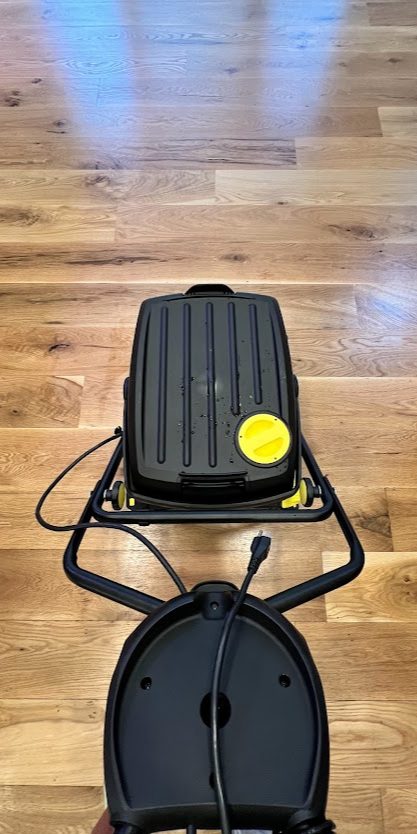
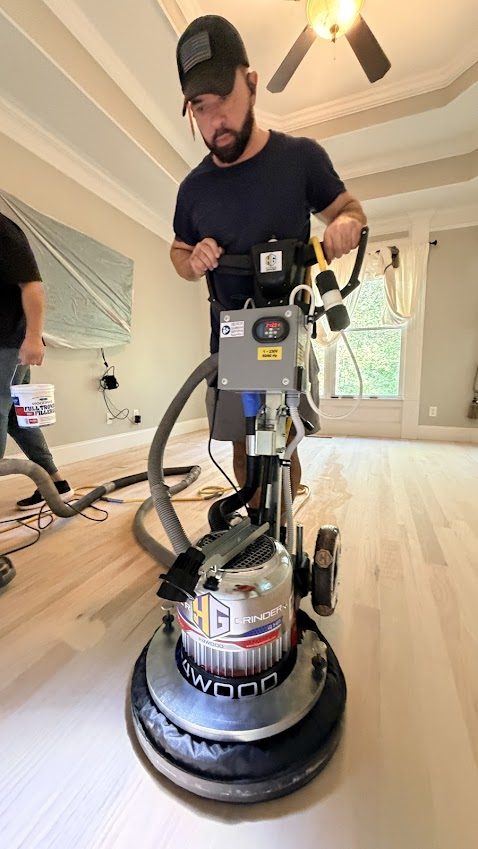
The Equipment Behind a Proper Deep Clean
Our crew's power buffer and floor-care equipment in use on real jobs.
Due for a Buff-and-Coat?
If your floors have lost their shine but the wood underneath is still in good shape, a screen-and-recoat can often be done in less than a day.
Frequently Asked Questions
How soon after refinishing can I put rugs down?
Plan on waiting the full cure time for your finish before introducing rugs — up to 14 days for waterborne finishes and up to 45 days for oil-modified polyurethane. Putting rugs down early can cause discoloration that shows up even after the rug is removed.
Can I use vinegar and water to clean my hardwood floors?
We don't recommend it. Vinegar and water dull a finish's shine over time, soap-based cleaners and wax leave residue, and steam cleaners introduce heat and excess water that can cause cupping and long-term damage. A hardwood-specific cleaner like Bona or Pallmann is the safer choice.
Why can't I use blue painter's tape on my new floors?
Blue tape's adhesive is strong enough to pull up polyurethane finish, and repairing the peeled spots is difficult. Keep any tape off a newly finished floor for at least 30 days after it's cured.
How often should hardwood floors be buffed and recoated?
Every 5 to 10 years is a reasonable window for most homes, depending on foot traffic. A buff-and-coat is a same-day service in most rooms and refreshes the finish without the cost or downtime of a full sand-and-refinish.
What's the ideal indoor humidity for hardwood floors?
Keep indoor humidity between 45% and 65%, with temperature between 65°F and 75°F, both above and below the installation. Wood is hygroscopic — it gains and loses moisture with the surrounding air — so staying in that range keeps gaps and cupping to a minimum.
Request a Free Estimate
Tell us about your floors and we'll call or text to set up your free on-site estimate — usually the same business day.
Thanks — We'll Be In Touch
A member of The Hardwood Guys team will call or text you to schedule your free on-site estimate. We schedule 24/7.