Call Now Text Free Estimate

Blog Category

Real White Oak Projects and Ideas

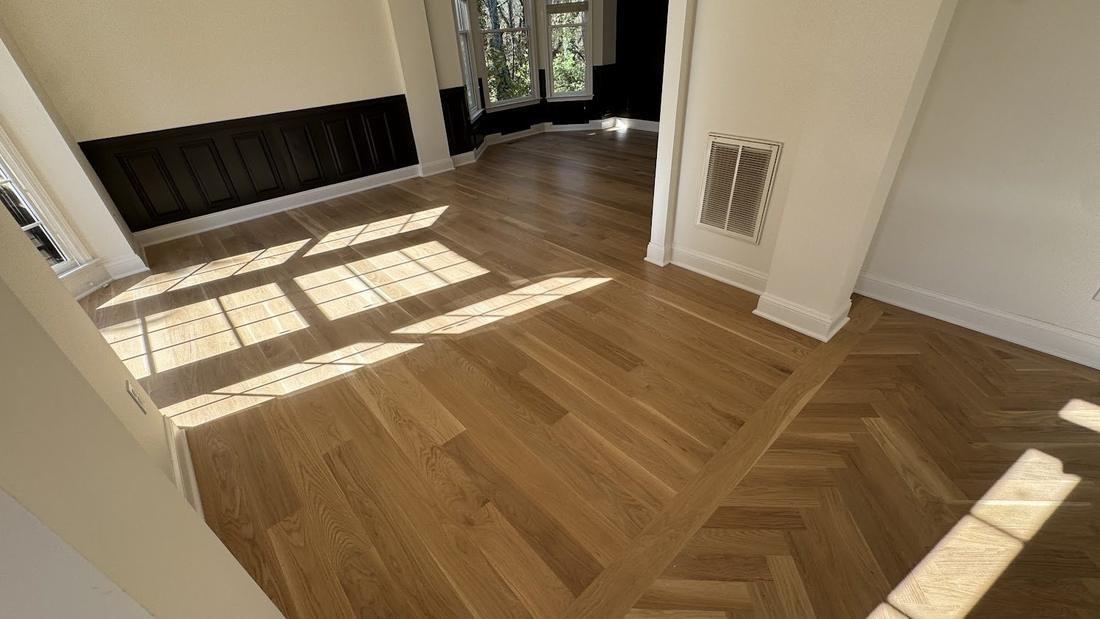
White oak has become the most requested species for new hardwood installations across North Metro Atlanta. These posts show real white oak projects — grades, stains, and finishes — completed by The Hardwood Guys.

  • 500+ Google Reviews
  • Featured on TV Multiple Times
  • 25 Years in Business

How white oak behaves in a Georgia summer

Wood moves with humidity, and North Georgia gives it plenty to move with. A floor installed in February at 30 percent indoor humidity and then run through an August at 60 percent will expand. White oak's closed grain makes it more forgiving than red oak here, but it is not immune, and the failures we get called out to are almost always acclimation failures rather than product failures.

The practical version: material should sit in the house, out of the boxes, for several days before anyone nails a board down, with the HVAC running at the temperature the family actually lives at. Not the temperature of an empty house under construction. Wide plank needs longer than strip. Engineered needs less than solid but still needs some. Skipping this is how you get gaps in winter and cupping in summer on an otherwise perfect installation.

Finishing white oak: what changes the look most

Sheen changes a floor more than most homeowners expect. Satin hides more and reads calmer. Semi-gloss bounces light and makes a room feel larger but shows every dog scratch. Matte reads modern and contemporary but shows footprints in a busy hallway.

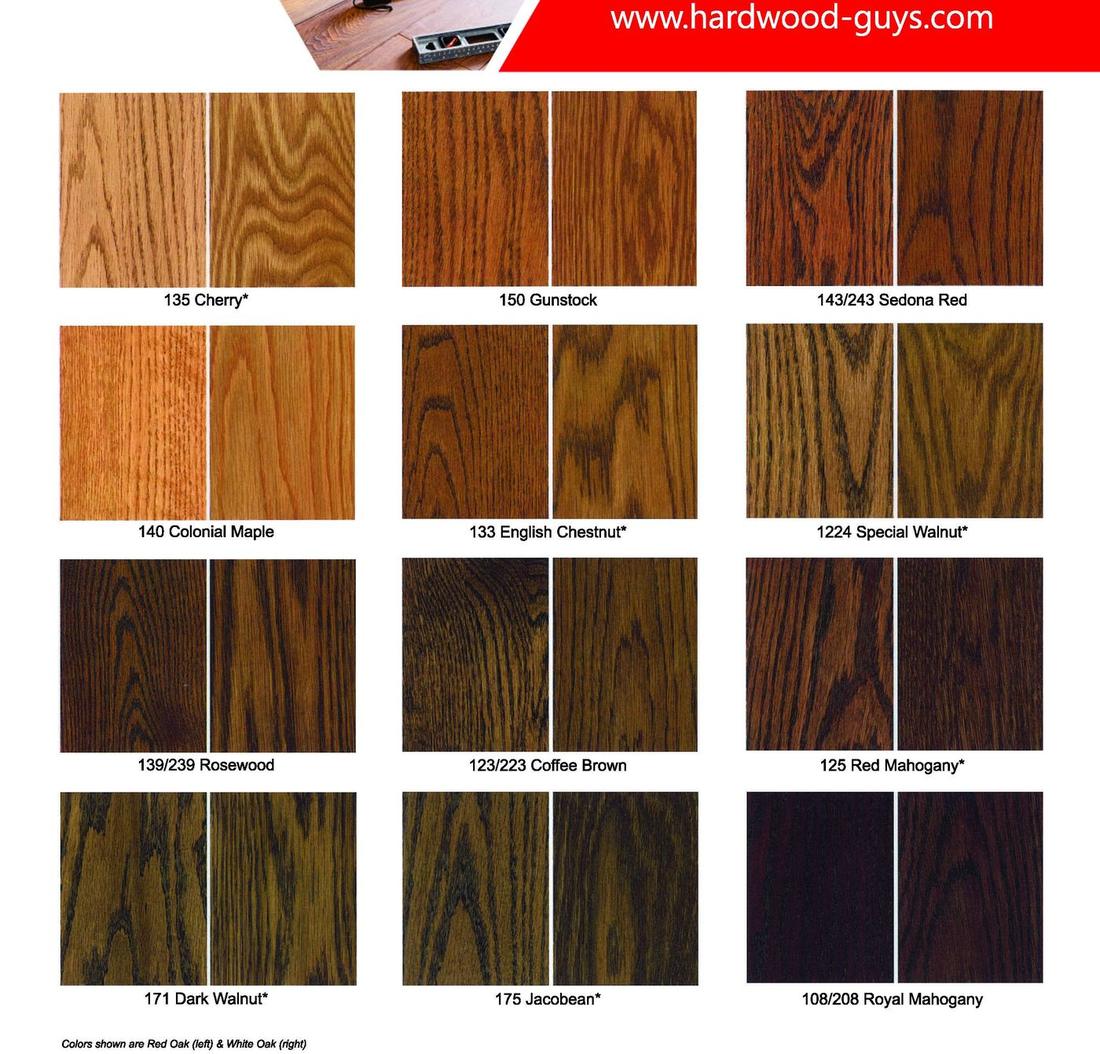
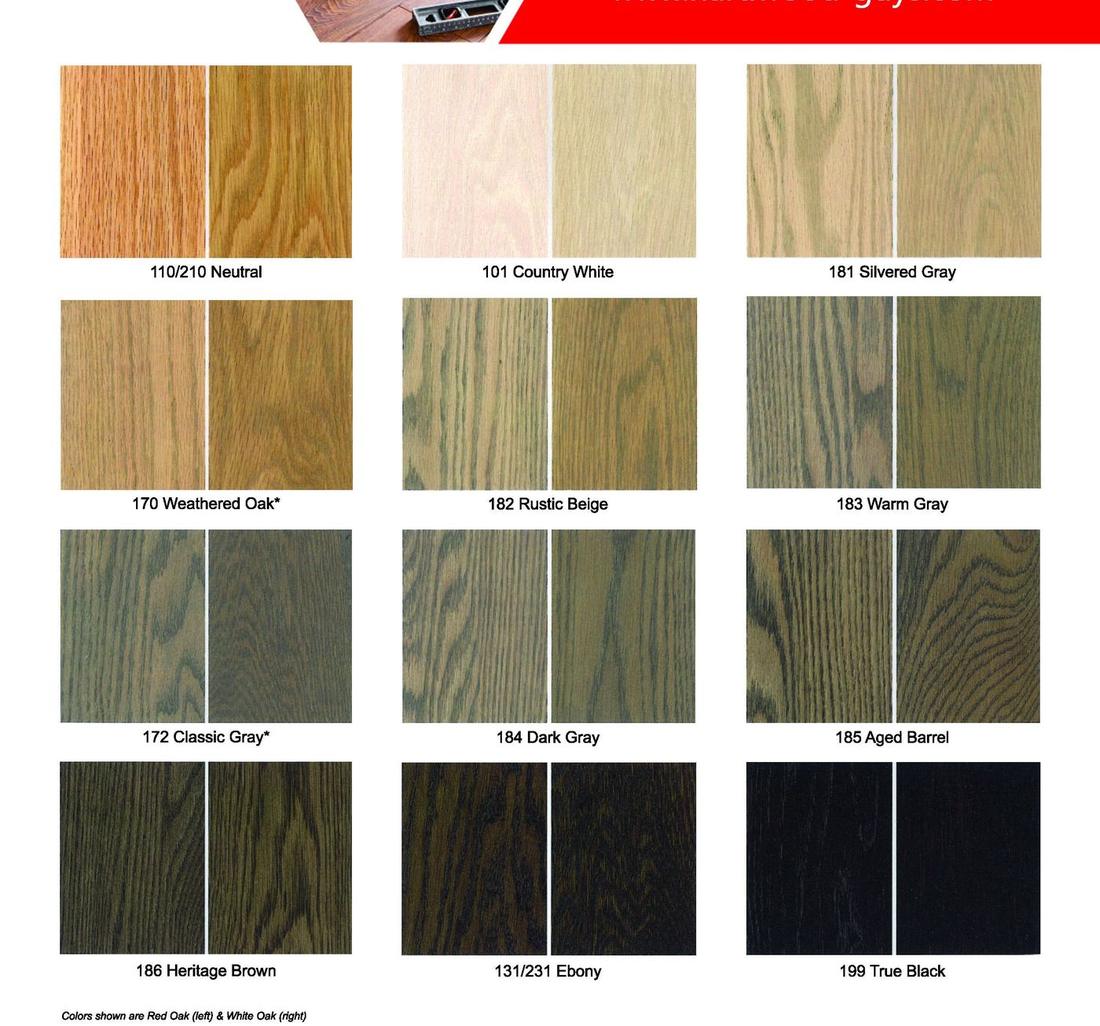
Sealer choice matters just as much on white oak because the wood is pale enough that the sealer's own tone shows. A natural sealer keeps it close to raw. A classic sealer warms it slightly. An ambering sealer pushes it golden, which suits a traditional house and fights a modern one. We put samples down on the actual floor before anyone commits, because a stain on a sample board in a showroom is not the same colour as that stain on your boards under your light.

Repair and matching

White oak is easier to repair invisibly than most species precisely because it is consistent. If a board is damaged we can usually lace new material in and, after sanding and finishing, find it only if we know where to look. The exception is rift and quartered, where the grain direction has to match or the repair announces itself.

Engineered or solid white oak

Solid white oak is one piece of wood all the way through, so it can be sanded and refinished many times over its life. Engineered white oak is a real white oak wear layer over a plywood or hardwood core, which makes it far more stable across humidity swings and lets it go over concrete slabs where solid cannot.

The wear layer is the number that matters and the number nobody quotes. A two-millimetre wear layer will take one careful refinish, maybe. A four-millimetre layer will take two or three. Below about two millimetres you are buying a floor you can never sand, only replace. Thickness of the whole board tells you nothing useful on its own — a thick board with a thin veneer is still a thin veneer.

For most North Atlanta homes on a crawl space with decent HVAC, either works. On a slab, over radiant heat, or in a basement, engineered is the honest answer.

Why white oak became the default in North Atlanta

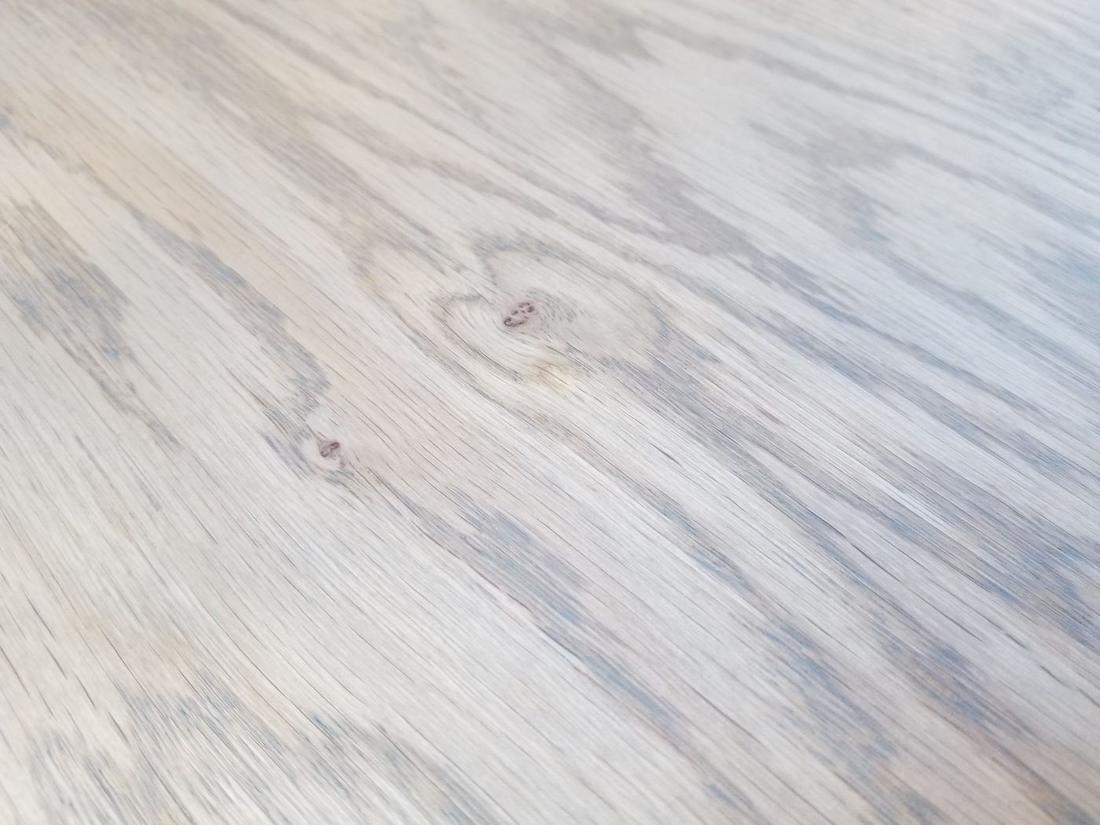
Fifteen years ago most of the floors we sanded around Woodstock and Marietta were red oak, because that is what builders put down. Today almost every new install and most refinishes we are asked about are white oak. The reason is colour: white oak runs brown and slightly grey, where red oak runs pink. Once a homeowner has seen the two side by side under the same stain, the decision usually makes itself.

White oak is also harder. It sits around 1360 on the Janka scale against red oak's 1290, and its closed cellular structure means it takes less water and dents less in a hallway. That closed grain is why it accepts a stain more evenly, and why it holds up better in a kitchen where a dishwasher will eventually leak.

Grades, and why the grade matters more than the species

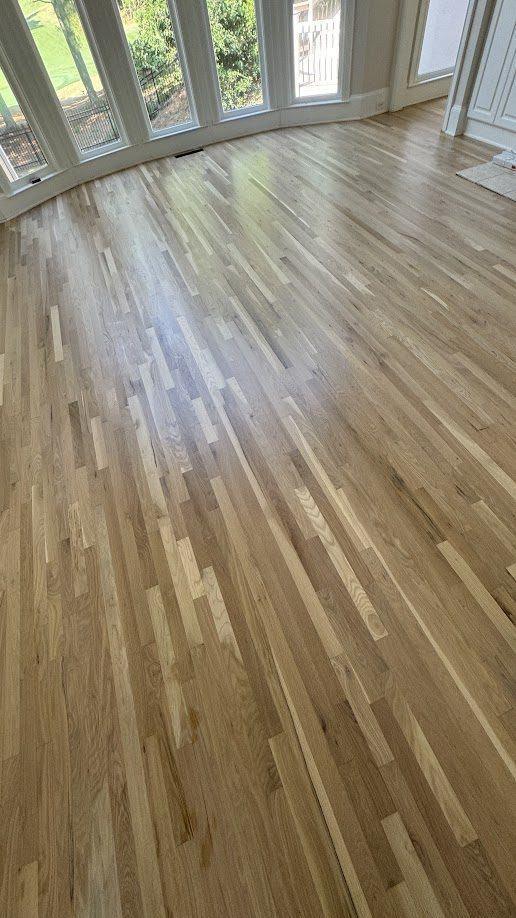
The same tree yields several grades, and the grade changes the look far more than most people expect. Select and Better is nearly clear, with long boards and little colour variation — quiet and formal. Number 1 Common brings knots, mineral streaks and shorter boards. Number 2 Common brings more of everything, including the dark mineral and colour swings that read as character. None of these are defects. They are sorting decisions, and the right one depends on whether you want the floor to recede or to be part of the room.

Rift and quartered white oak is cut differently again — the log is sawn so the growth rings meet the face near vertical, which produces a tight straight grain with no cathedral figure at all. It is the most dimensionally stable way to buy oak, and the most expensive.

What to think about before you choose

Wide plank looks better in a large open room and worse in a small one. Anything over five inches wants to be engineered or properly acclimated, because a solid seven-inch board moves a lot across a Georgia summer. Lighter and more natural finishes show less dust but more scratches; darker stains do the reverse. And if you are matching into an existing floor, bring us a board — species, grade and cut all have to line up or the transition will always read as a repair.

The posts below cover real jobs we have done in white oak, from Number 2 Grade with Early American stain in Woodstock to engineered wide plank walk-throughs.

10 Posts in White Oak Flooring Ideas

Ready to Get Started?

Schedule a free on-site estimate — we’ll assess your floors and give you an honest recommendation, not a sales pitch.

Request a Free Estimate

Tell us about your project and we'll get back to you with an estimate — usually the same business day.

Enter your name.

We'll call to confirm your appointment.

Enter a valid phone number.

Enter a valid email address.

Enter your address or city.

Choose a service type.

We respond during business hours, Monday–Friday 7AM–5PM. No spam, no third-party sharing.

Thanks — We'll Be In Touch

A member of The Hardwood Guys team will call or text you during business hours (Mon–Fri, 7AM–5PM) to schedule your free on-site estimate.